



HVAC Resistor
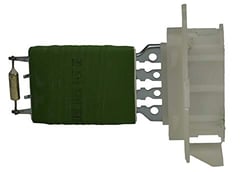
Hella 351332371 Blower Motor Resistor, 12V 4-Pin HVAC Fan Resistor

 Representative Photo, actual item may vary

 Representative Photo, actual item may vary


What Is an HVAC Blower Motor Resistor?
The HVAC blower motor resistor is one of those small but critical electrical components that most drivers never think about — until it fails. HVAC resistors are responsible for regulating the speed of your vehicle's cabin blower fan, translating a simple knob or button on your dash into precise airflow control. Understanding how this part works can save you a frustrating diagnostic chase when your heat or air conditioning stops behaving as expected.
Blower motor resistors control the electrical current flowing from the fan switch to the blower motor, allowing you to set the fan at different speeds. Each fan speed setting routes power through a different resistor in the pack, varying the resistance — and therefore the current — delivered to the motor. The lower the resistance selected, the more current flows, and the faster the blower spins. At the highest speed setting, the resistor is bypassed entirely, connecting the motor directly to full power for maximum airflow.
In newer vehicles, this function may be handled by a solid-state electronic control module rather than traditional wound wire resistors, but the end result is the same: precise, multi-speed airflow control for heating, ventilation, and air conditioning.
Signs of a Failing HVAC Resistor
Because the resistor is mounted inside the HVAC ductwork — kept cool by the airflow it controls — it's exposed to constant heat cycling and, over time, can succumb to corrosion or overheating. The most telling symptom of failure is a blower fan that only works on the highest speed setting, with lower speeds becoming unresponsive. In more severe cases, a failed resistor can cause the blower fan to stop working altogether, cutting off both heating and defrost capability — a genuine safety concern in cold weather.
- Blower fan stuck on one speed (usually the highest)
- Certain fan speed settings not working while others function normally
- Blower fan completely inoperative at all speeds
- Weak or inconsistent airflow from cabin vents
Choosing the Right HVAC Resistor
Fit and electrical compatibility are paramount when shopping for a replacement HVAC resistor. Because connector configurations, resistance values, and mounting locations vary widely by make, model, and year, always verify fitment before purchasing. OEM-grade and OEM-equivalent parts are generally the most reliable choice, as they're designed to match original specifications exactly. Also consider inspecting the blower motor itself — a worn or failing motor can draw excessive current that will prematurely destroy a new resistor.
Top Brands for HVAC Blower Motor Resistors
For Ford and Lincoln owners, Motorcraft is the go-to source for OEM-quality HVAC resistors. Motorcraft resistors are engineered to meet Ford's own engineering standards and undergo rigorous lab and real-world testing — making them a trusted choice for anyone who wants a factory-spec replacement.
URO Parts specializes in components for European vehicles, offering HVAC resistors that deliver solid OEM-equivalent fit and function for brands like BMW, Volvo, and Mercedes-Benz — a reliable option for import owners who need an accessible, quality replacement.
Mopar Performance brings the same factory-engineering philosophy to Chrysler, Dodge, Jeep, and Ram vehicles, with HVAC resistors designed to integrate seamlessly with those platforms' original electrical systems.
Replacement offers one of the broadest selections of HVAC resistors in the category, making it a practical choice for shoppers covering a wide range of domestic vehicle applications on a budget-conscious approach.
Rounding out the lineup, Airtex Automotive Division brings decades of experience in automotive thermal and electrical components, providing dependable HVAC resistors suited for a variety of popular domestic platforms.