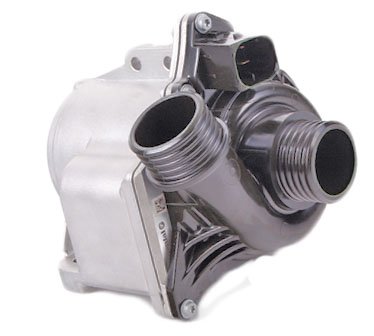
Electric Engine Water Pump
Bosch 0392024058 PCE Electric Coolant Pump 12V Brushless Centrifugal Water Pump
What Is an Electric Engine Water Pump?
An electric engine water pump is a modern cooling system component that replaces — or works alongside — a traditional belt-driven mechanical water pump. Rather than being tied to crankshaft speed, an electric water pump uses an onboard electric motor to circulate coolant through the engine independently of engine RPM. This fundamental difference opens the door to a far more intelligent and responsive approach to engine thermal management.
At its core, the electric water pump pushes coolant from the radiator into the engine block and cylinder heads, absorbing heat before returning it to the radiator to be dissipated. What sets the electric design apart is how it does this: the pump's output is governed by the vehicle's ECU, which can ramp coolant flow up or down in real time based on actual engine temperature and load conditions — not just how fast the engine happens to be spinning.
Why Electric Water Pumps Matter
Mechanical water pumps have a well-known inefficiency: because their speed is directly proportional to engine speed, they are often circulating far more coolant than the engine actually needs at cruising speeds, while simultaneously struggling to keep up during low-speed, high-heat situations like stop-and-go traffic or idling after a hard run. An electric water pump eliminates this drawback. It operates precisely when and where cooling is needed, reducing parasitic energy losses and improving overall fuel efficiency.
- Improved fuel economy: By only running at the speed the engine demands, electric pumps reduce the load on the engine and cut wasted energy.
- Better engine temperature control: The ECU can maintain a consistent, optimal operating temperature regardless of driving conditions, which also reduces exhaust emissions.
- Post-shutdown cooling: Unlike a belt-driven pump, an electric unit can continue circulating coolant after the engine is switched off, preventing heat soak on turbocharged and high-performance engines.
- Quieter operation: Fewer mechanical connections mean less vibration and noise compared to belt-driven counterparts.
- Compact and flexible installation: Without the need for belt and pulley alignment, electric pumps can be mounted in a wider variety of locations within the engine bay.
Electric water pumps are increasingly common in European luxury vehicles, hybrids, and electric vehicles, where precise thermal management is essential for performance, longevity, and emissions compliance. In hybrid and EV applications, these pumps also play a critical role in cooling battery packs, electric motors, and power electronics.
Top Brands in Electric Engine Water Pumps
Pierburg is the category leader by a wide margin, and for good reason. Founded in 1909 and acquired by the Rheinmetall Group in 1986, Pierburg has deep roots as an OE supplier to the German automotive industry. Notably, Pierburg was one of the first suppliers in the world to bring an electric coolant pump to series production for BMW. Their CWA-series pumps — featuring brushless canned motors, integrated variable-speed controllers, and PWM or LIN bus controllability — are a trusted choice for OE replacement and performance upgrades alike.
Bosch brings its decades of OE supplier experience to the electric water pump segment. Bosch auxiliary electric water pumps are engineered to meet rigorous OEM quality standards, and every unit undergoes end-of-line function and leak testing before leaving the factory. Their pumps are compatible with a broad range of European vehicles, including Audi, Volkswagen, Mercedes-Benz, and Porsche platforms.
GMB North America rounds out the top tier, offering a reliable and accessible option for shoppers seeking quality coverage across a wide range of vehicle applications. GMB is a well-established name in the water pump segment with a reputation for consistent fit and dependable performance.
What to Consider When Shopping for an Electric Water Pump
When selecting an electric engine water pump, verify the part matches your specific year, make, and model — fitment is critical, as pump connectors, flow rates, and control protocols (such as PWM vs. LIN bus) vary by application. For vehicles with factory electric water pumps, an OE-equivalent replacement from a trusted brand ensures seamless integration with your vehicle's engine management system. Enthusiasts converting from a mechanical pump setup should also consider any necessary belt routing changes or control module requirements.