



Active Suspension Relay
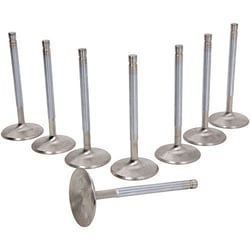

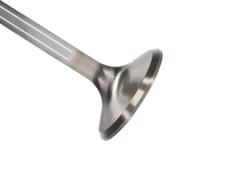
Manley 11671B-8 Race Master Exhaust Valves for Chrysler HEMI 6.1L 1.625" with Bead Loc Groove
What Is an Active Suspension Relay?
Modern vehicles have grown far more sophisticated than their spring-and-shock predecessors. At the heart of that evolution is the active suspension system — a computer-controlled network that continuously adjusts damping behavior in real time to match road conditions, cornering forces, acceleration, and braking. The active suspension relay is a small but mission-critical electrical component within that network: it acts as the electronic switch that allows the vehicle's control module to energize or de-energize the suspension actuators, compressors, or solenoids that physically control ride height and damper firmness.
How Active Suspension Relays Work
An active suspension system relies on an onboard computer that detects body movement from sensors throughout the vehicle. Active suspension relays serve as the intermediary between that control module and the high-current components it needs to command. When the ECM or suspension control module sends a signal, the relay closes its internal circuit, delivering the power necessary to activate the compressor, actuator motor, or solenoid valve — all without routing high amperage directly through the control module itself.
Because these relays handle repeated high-current switching cycles and are exposed to engine-bay heat, vibration, and moisture, they can wear out over time. A faulty active suspension relay can cause the system to remain stuck in a "soft" or "firm" state, trigger a suspension warning light, or disable ride-height control entirely — all of which directly affect handling, safety, and tire wear.
Signs of a Failing Active Suspension Relay
- Suspension warning light illuminated on the dashboard
- Ride height that will not adjust or stays at one extreme
- Compressor running continuously or not activating at all
- Unusually harsh or unusually soft ride quality
- Stored fault codes related to the suspension control module
What to Consider When Replacing an Active Suspension Relay
Because active suspension relays are deeply integrated with a vehicle's electronic control strategy, fitment precision matters enormously. Always match the replacement relay to your vehicle's exact year, make, model, and engine. OEM-specification relays ensure the amperage rating, terminal configuration, and thermal characteristics align perfectly with what the factory suspension control module expects. Using an incorrect relay can result in continued fault codes or even damage to the module or actuators.
It is also worth inspecting the relay's fuse and the corresponding wiring harness connector when replacing this component — corrosion or a blown fuse in the same circuit can mimic a failed relay and should be ruled out before condemning the part.
Top Brands for Active Suspension Relays
For vehicles in the Chrysler, Dodge, Jeep, and Ram family, Mopar Performance is the definitive source for active suspension relays. As the OEM parts arm of Stellantis, Mopar engineers its relays to exact factory specifications, ensuring seamless integration with the vehicle's suspension control module and electrical architecture — making it the go-to choice whenever a direct-fit, no-compromise replacement is required.