



Diesel Particulate Filter
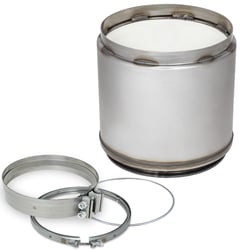

 Representative Photo, actual item may vary

 Representative Photo, actual item may vary
 Representative Photo, actual item may vary
 Representative Photo, actual item may vary
What Is a Diesel Particulate Filter (DPF)?
Diesel particulate filters (DPFs) are one of the most critical emissions-control components on any modern diesel-powered vehicle. Diesel particulate filters sit within the exhaust system — downstream of the engine and in line with the catalytic converter — and their job is straightforward but vital: capture the soot and particulate matter (PM) produced during diesel combustion before it ever reaches the atmosphere. Wall-flow DPFs typically remove 85% or more of soot, and under optimal conditions can approach 100% filtration efficiency.
How Does a DPF Work?
The filter itself is built around a fine-pore ceramic structure — commonly made from cordierite or silicon carbide — with thousands of tiny honeycomb-shaped channels whose alternating ends are plugged. As exhaust gas flows through, soot and particulate matter are deposited on the porous channel walls rather than passing through to the tailpipe. Over time, these trapped particles accumulate and must be cleared through a process called regeneration.
There are two main regeneration methods. Passive regeneration relies on normal operating exhaust heat to continuously oxidize soot during regular driving. Active regeneration uses engine management systems to elevate exhaust temperatures — sometimes injecting a small amount of fuel upstream of the DPF — to burn off accumulated soot more deliberately. In both cases, the burned-off particulate matter is converted into carbon dioxide and water vapor, leaving behind only a small amount of ash. Diesel vehicles manufactured after 2009 are required to include a DPF, and in many cases a Selective Catalytic Reduction (SCR) system works alongside it to further reduce harmful NOx emissions.
Why Replacing a Failing DPF Matters
A clogged or failing DPF is more than an emissions problem — it can cause excessive exhaust backpressure, reduced engine performance, elevated fuel consumption, and potentially trigger a costly check-engine warning. Ignoring a DPF issue can ultimately lead to more severe damage and a far more expensive repair. Choosing the right replacement filter — one engineered to match your vehicle's OE specifications — is essential for restoring proper function and keeping regeneration cycles working as designed.
Top Brands for Diesel Particulate Filters
When it comes time to replace a DPF, a few trusted names stand out in the category:
- MagnaFlow — An ISO-9001 certified exhaust specialist, MagnaFlow manufactures DPF replacement units and DPF-back exhaust systems in the USA. Their direct-fit DPF replacements are engineered to meet or exceed OEM specifications, while their PRO DPF and Black DPF performance series offer stainless steel construction for diesel truck owners seeking both compliance and improved flow.
- Dorman — With over a century of aftermarket experience, Dorman offers direct-fit DPF replacements designed to match the fit and function of the original filter. Their DPF lineup covers a broad range of light- and heavy-duty applications, including popular Ford and Dodge/Ram diesel platforms, and each unit is backed by Dorman's team of U.S.-based product experts.
- Mopar Performance — The factory-authorized parts division for Stellantis vehicles, Mopar is the go-to source for OEM-grade DPF replacements on Dodge, Ram, Jeep, and Chrysler diesel applications. When exact factory fit and certified performance specs matter most — particularly on Cummins-powered Ram trucks — Mopar delivers the confidence of a dealer-quality part.
- Wilson HD Electrical — Specializing in heavy-duty applications, Wilson HD brings its commercial and fleet-vehicle expertise to the DPF segment, offering units suited for demanding work-truck and HD diesel environments where reliability under sustained load is paramount.
- OP Converters — OP Converters rounds out the category with focused DPF solutions aimed at delivering cost-effective, properly engineered replacements for diesel vehicle owners looking for reliable emissions-system restoration.
What to Consider When Shopping for a DPF
- Direct-fit vs. universal: Always choose a direct-fit DPF engineered specifically for your vehicle's make, model, and engine. An incorrect filter can lead to additional repair costs.
- OEM vs. aftermarket: OEM-grade units from brands like Mopar or MagnaFlow are built to factory specifications; high-quality aftermarket options from Dorman offer a reliable, often more accessible alternative.
- CARB compliance: If you are in California or another CARB-regulated state, verify that the DPF you select carries the appropriate CARB compliance certification before purchasing.
- Substrate material: Silicon carbide cores generally offer higher thermal durability than cordierite, though both are widely used and effective for most on-road diesel applications.
- Maintenance history: Consider whether your current DPF failed due to clogging from interrupted regeneration cycles — addressing the root cause (short-trip driving habits, faulty sensors) will extend the life of any replacement unit.