



Torque Tube
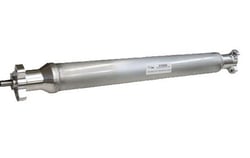
Drive Shaft Shop GMC5M-1-E Aluminum Torque Tube Driveshaft Coupler Eliminator 1000HP+ C5 Corvette

What Is a Torque Tube?
Torque tubes are one of the more fascinating and historically significant components in the driveline world. A torque tube is a large-diameter stationary housing that surrounds the rotating driveshaft, running between the transmission and the rear differential. Rather than allowing the rear axle to absorb all the rotational forces generated during acceleration and braking, the torque tube acts as a rigid structural link that transfers those forces back to the chassis and engine mounts — keeping everything in precise alignment.
The core function of a torque tube is to prevent axle wrap — the tendency of a differential housing to rotate forward under hard acceleration and pitch back under braking. By rigidly connecting the differential to the transmission via a stationary outer tube, the driveshaft is free to spin inside without the surrounding housing rotating with it. A torque ball (or spherical joint) at the transmission end allows for suspension travel and angular movement while maintaining this rigid connection.
Where Torque Tubes Are Used
Torque tube designs have appeared across a surprisingly wide range of vehicles. Historically, they were common on American production cars from the early 1900s through the mid-20th century — from Ford Model Ts to Buick full-size sedans. In the performance and sports car world, the torque tube was independently chosen by engineers at Porsche (924, 928, 944) and Chevrolet (C4, C5, C6 Corvette) to achieve near-perfect 50/50 front-rear weight balance by placing the transmission at the rear of the car. Today, torque tube drivelines are especially prevalent in open-wheel racing, including sprint cars and midget race cars, where precise driveline geometry and minimal unsprung weight are critical for on-track performance.
Torque Tubes for Racing Applications
In sprint car and midget racing, the torque tube connects the quick-change rear end to the engine/transmission package and serves as a key structural and driveline component. Racing torque tubes are precision-machined from lightweight aluminum, often featuring hardcoat anodizing and PTFE (Teflon) coatings on the inner bore to minimize friction and binding during suspension articulation. Tube length must be matched carefully to the specific chassis, and the inner bore diameter must be compatible with the torque ball assembly being used.
Top Brands in Torque Tubes
ACDelco brings OEM-grade engineering to the torque tube category, making it the go-to choice for restorers and technicians working on factory vehicles that originally used torque tube drivelines. ACDelco's commitment to precise fit and material quality makes their parts a trusted option for OEM-specification repairs.
Diversified Machine (DMI) is a cornerstone brand in sprint car and midget racing driveline components. Their aluminum torque tubes — available in lightweight and heavy-duty configurations in 28-inch and 32-inch lengths — are crafted from high-strength 2024-T3 aluminum and feature hardcoat anodizing and PTFE coatings for smooth, no-bind operation. DMI's Bulldog quick-change rear end ecosystem makes their torque tubes a natural complement to a complete racing driveline package.
MPD Racing offers one of the widest selections of racing torque tubes on the market, covering sprint car and midget applications in multiple lengths (24-inch through 35-inch) and outer diameter configurations. All MPD torque tubes are manufactured and assembled in the USA and feature Teflon-coated aluminum construction for reliable, low-friction performance race after race.
Winters is a well-respected name in racing driveline components, and their torque tube lineup reflects the same attention to detail found throughout their product range. Winters offers torque tubes with collar assemblies featuring hard Teflon liner tubes, providing smooth engagement with the torque ball and long service life in competitive racing conditions.
What to Consider When Shopping for a Torque Tube
- Application type: OEM replacement (street/classic car) vs. open-wheel racing (sprint car or midget)
- Tube length: Must match your chassis specs — racing tubes typically range from 24 to 35 inches
- Outer diameter and bore: Must be compatible with your torque ball assembly and housing
- Material: Aluminum is standard for racing; OEM applications may use steel
- Coating: Hardcoat anodizing and PTFE/Teflon coatings reduce friction and extend service life in racing applications
- System compatibility: Ensure the tube matches your torque ball, housing, and quick-change rear end brand