



Engine Timing Belt Tensioner Pulley


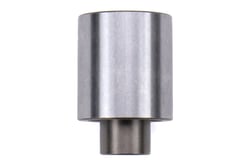


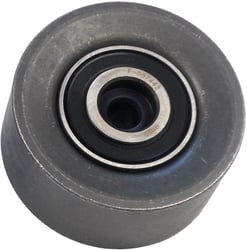


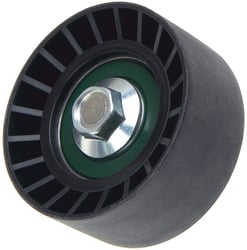
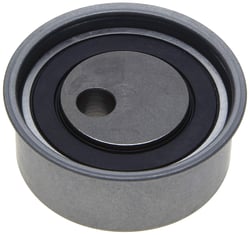
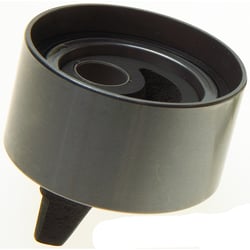
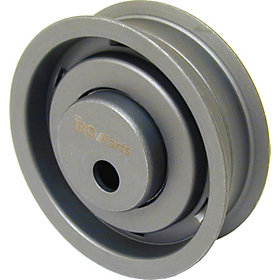 Representative Photo, actual item may vary

Koyo PU106018FRR1D Timing Belt Tensioner Pulley for Mitsubishi 3.0L 3.5L 3.8L V6


What Is an Engine Timing Belt Tensioner Pulley?
The timing belt tensioner pulley is one of the most consequential small components in your engine's valve train system. Its core job is deceptively simple: maintain precise, consistent tension on the timing belt as it synchronizes the rotation of the crankshaft and camshaft. Without it, even a perfectly new timing belt can slip, skip teeth, or go slack — with consequences that can range from poor fuel economy to catastrophic engine failure.
The timing belt itself coordinates the opening and closing of engine valves with the movement of the pistons. As one source puts it, engine timing belt tensioner pulleys work to ensure that key belts don't become loose, because the ripple effect can affect everything from compressors and pumps to drive shafts and gears. When belt tension is off, valve timing is off — and in interference engines, that can mean bent valves or destroyed pistons.
How Timing Belt Tensioner Pulleys Work
A tensioner pulley contacts the timing belt directly, applying uniform, continuous force to keep it taut under all operating conditions. Many modern designs are spring-loaded, allowing them to self-adjust as the belt naturally stretches over time and as engine temperatures fluctuate. More advanced automatic designs use hydraulic dampers for even finer tension control across a broad range of engine loads and thermal conditions.
The internal construction matters enormously. At the core of every quality tensioner pulley is a precision bearing — typically a sealed deep-groove ball bearing — surrounded by a durable pulley housing. These bearings must handle high-speed rotation and elevated engine temperatures throughout the belt's full service life. Signs of a failing tensioner pulley include a rattling or squealing noise on startup, erratic RPMs, or visible belt wobble.
When Should You Replace a Timing Belt Tensioner Pulley?
Industry best practice is clear: when you replace the timing belt, replace the tensioner pulley too. The labor involved in accessing the timing system is significant, and a worn tensioner can quickly ruin a brand-new belt. It is generally recommended that you also inspect and replace related components — including idler pulleys, the water pump, and any applicable oil seals — at the same service interval to avoid a repeat job.
Top Brands in Engine Timing Belt Tensioner Pulleys
Cloyes is a name that has been synonymous with timing system components since 1921. As a North American leader and global designer of timing drive systems, Cloyes engineers tensioner pulleys designed to absorb changes in belt tension during crankshaft revolution, reducing noise, preventing belt flapping, and ensuring proper transmission efficiency throughout the belt's service life. Their replacement tensioner pulleys meet or exceed OEM performance requirements and cover a wide range of domestic and import applications.
NSK brings world-class bearing engineering directly to the timing belt tensioner pulley category. Founded in 1916 as the manufacturer of Japan's first ball bearings, NSK partners with top automakers globally and applies that OEM-level precision to its aftermarket tensioner pulleys. Key features include super-finished, precision-matched bearing raceways, advanced multi-lip seal technology, and a sealed-for-life design with all-weather grease — making them a strong choice for enthusiasts prioritizing long-term reliability.
Key Considerations When Shopping
- OEM fit and spec: Always verify the tensioner pulley is engineered for your specific engine application — improper fitment can throw off belt routing and tension.
- Bearing quality: Look for sealed, precision bearings rated for high-speed and high-temperature operation.
- Replace as a system: Consider purchasing a complete timing belt kit that includes matched tensioners, idlers, and the belt itself for guaranteed compatibility.
- Manual vs. automatic: Automatic tensioners self-adjust over the product's life and are the preferred choice in most modern engine designs.