



Ignition Condenser
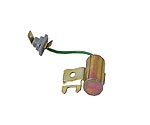



 Representative Photo, actual item may vary


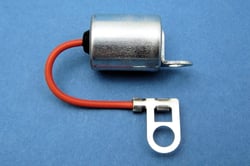
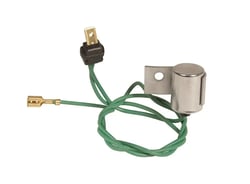
 Representative Photo, actual item may vary
What Is an Ignition Condenser?
An ignition condenser — also called a distributor condenser or points capacitor — is one of the most deceptively simple yet critical components in a classic points-type ignition system. In electrical engineering terms, a condenser and a capacitor are interchangeable, and in the context of a vehicle's ignition, the condenser is wired in parallel with the breaker points on the negative side of the ignition coil.
Here's what it actually does: when the points open inside the distributor, the magnetic field built up in the coil's primary winding collapses rapidly. Without a condenser in place, this collapsing field generates a high-voltage surge that arcs violently across the open contact points, burning and pitting them in the process. The condenser absorbs that inductive kick, allowing the magnetic field to collapse cleanly — which in turn produces a strong, well-defined spark at the spark plug. In short, a healthy condenser protects your points and maximizes spark energy at the same time.
Why the Condenser Matters More Than You Think
At a typical cruising engine speed, the ignition points in a four-cylinder engine can open and close more than 80 times per second. That kind of relentless mechanical and electrical stress means a failing condenser can take out a fresh set of points in surprisingly little time. Worse, a condenser that has completely failed will prevent the engine from running at all — it is not a component you can limp along without.
Symptoms of a failing condenser include rough idle, misfires, difficulty starting, premature point wear, and in severe cases a sudden no-start condition. Because condensers are inexpensive and easy to swap, it is standard practice to always replace the condenser at the same time as the ignition points during any tune-up on a points-equipped engine.
What to Look for When Shopping for an Ignition Condenser
- Correct capacitance rating – Condensers are rated in microfarads (µF). Using the wrong rating can cause weak sparks or accelerated point wear.
- Mounting style – Some condensers mount externally on the distributor body; others are designed to mount inside the distributor. Verify which style your distributor uses.
- Lead wire length and connector type – Ensure the wire reaches your points terminal cleanly without strain.
- OEM vs. aftermarket – For vintage and classic vehicles, OEM-spec condensers are often recommended to preserve original ignition timing characteristics.
Top Ignition Condenser Brands
Bosch is a leading brand in this category and a natural choice for classic European vehicles. With roots going back to 1886, Bosch has long been an original equipment supplier for brands like Volkswagen, Mercedes-Benz, and Porsche, making their condensers a factory-correct solution for those platforms.
Standard Motor Products (SMP) is one of the most trusted names in the North American aftermarket, having been established in 1919. Their ignition condensers are designed to exceed OEM specifications and cover a wide range of domestic applications, including vintage Ford, Lincoln, Mercury, and GM vehicles.
Original Engine Management (OEM) rounds out the top three with a straightforward focus on quality replacement ignition components. Their condensers are a solid choice for enthusiasts looking for reliable, application-specific fitment across a broad vehicle range.
For more specialized or vehicle-specific needs, IAP and Genuine also offer ignition condensers that cater to distinct platforms and original-equipment standards, rounding out a well-stocked selection for restorers and mechanics alike.