



V-Belts


 Representative Photo, actual item may vary
Gates PV389 Fractional Horsepower V-Belt 38.9 Outside Circumference

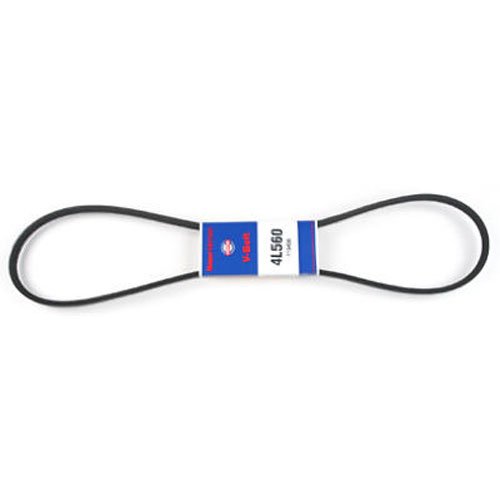 Representative Photo, actual item may vary
What Are V-Belts and Why Do They Matter?
A V-belt is a flexible power transmission belt with a trapezoidal, or V-shaped, cross-section that transmits torque through friction generated between the belt's sidewalls and the grooves of a pulley or sheave. Typically constructed from rubber compounds reinforced with fiber or steel cords, V-belts combine strength with flexibility, and are designed to improve transmission efficiency, reduce slippage, and dampen vibration and noise.
There's no doubt why V-belts are the most commonly used belts in power transmission — they provide a solid combination of traction, speed transfer, drive load distribution, and service life. V-belts provide superior load-carrying capacity, controlled clutching, traction, and maximum power transfer, and are capable of resisting oil, heat, and extreme weather conditions — transferring power for conveyors, air handling fans, blowers, exhausts, pumps, compressors, crushers, and machine tools.
How V-Belts Work
When in use, the trapezoidal "V" shape of the belt tracks in a groove on a pulley or sheave. The belt wedges into the groove as the load increases, and the greater the load, the greater the wedging action — creating power distribution and torque to whatever the V-belt is operating. Generally the most economical component in the system, belts can also act as a "safety fuse" by slipping or breaking under a peak or shock load situation, which can protect the more expensive components of the system.
Types of V-Belts
With today's diverse industrial environments, different types of V-belts can be selected to match specific application requirements. Understanding the key categories will help you choose the right belt for your equipment:
- Classical V-Belts (A, B, C, D, E): These feature a wider top and deeper cross-section, and are suitable for general-purpose drives.
- Narrow Wedge V-Belts (SPZ, SPA, SPB, SPC): Designed with steeper sidewall angles and narrower tops, these allow higher power transmission in a more compact space and are ideal for smaller pulleys and higher torque applications.
- Fractional Horsepower (FHP) V-Belts: Lightweight belts used in low-power applications, typically under 1 HP, such as fans and small appliances.
- Cogged V-Belts: Cogged construction allows the belt to flex around the drive sheave and run cooler than non-cogged standard V-belt designs.
- Double V-Belts: Double V-belts provide traction with two V-shaped surfaces, making them suitable for demanding industrial environments.
What to Consider When Shopping for V-Belts
Selecting the correct V-belt requires matching the belt cross-section, length, and construction to your specific machine and load requirements. Under-tensioning leads to slippage and reduced efficiency, while over-tensioning can cause premature wear and bearing damage — so always verify your system's tension specifications. For notched belts, avoid using them on worn or damaged pulleys to maintain flexibility and performance. Consider the operating environment as well; high-heat or high-moisture conditions may call for specialty belt compounds.
Top Brands in V-Belts
When it comes to trusted names in V-belt drives, Browning stands at the top of the field. Founded in 1886 in Wheeling, West Virginia, Browning has a rich history of providing high-quality, reliable power transmission products, and is now part of Regal Rexnord as a world leader in V-belt drives, serving industries from HVAC to industrial manufacturing. Browning belt drives provide one of the largest selections of V-belts and sheaves available. Their lineup includes well-known product lines such as the Super Gripbelt®, Gripnotch®, and TorqTitan™ series, covering everything from light fractional horsepower applications to heavy-duty industrial drives.