



Temperature Sensors & Thermistors



 Representative Photo, actual item may vary
Bosch 8733953170 Compressor Return Temperature Sensor for BOVA Heat Pump Condensing Units
 Representative Photo, actual item may vary
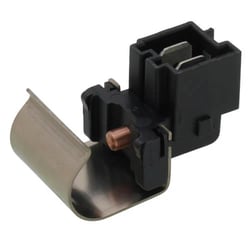
 Representative Photo, actual item may vary
Bosch 7738006262 AquaSmart Boiler Temperature Sensor with Water Level Detection
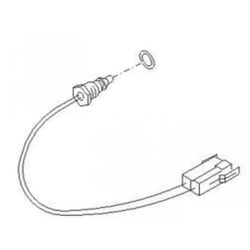
 Representative Photo, actual item may vary
Bosch 7738007304 Outdoor Temperature Sensor for Singular and Greenstar Boilers
 Representative Photo, actual item may vary


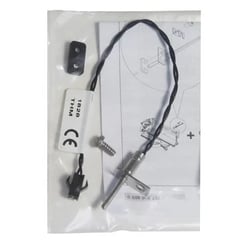
Bosch 87072064590 Exhaust Temperature Sensor for Greentherm Tankless Water Heaters

What Are Automotive Temperature Sensors & Thermistors?
Temperature sensors and thermistors are small but mission-critical components found throughout your vehicle's engine, drivetrain, and climate systems. At their core, these devices measure heat at key points — coolant passages, intake manifolds, exhaust streams, transmission fluid, and more — and relay that data to the engine control module (ECM) or body control module (BCM). The ECM uses this information to make real-time decisions about fuel delivery, ignition timing, cooling fan operation, and emissions controls. When a temperature sensor fails or reads incorrectly, the ripple effects can be immediate and far-reaching.
Thermistors vs. Other Temperature Sensors: What's the Difference?
A thermistor is a specific type of temperature sensor whose electrical resistance changes predictably in response to temperature. Most automotive thermistors are NTC (Negative Temperature Coefficient) devices, meaning their resistance drops as temperature rises. This predictable behavior makes them ideal for analog readings in systems like coolant temperature sensing, intake air temperature (IAT) monitoring, and HVAC blend door control.
Other temperature sensors — such as exhaust gas temperature (EGT) sensors or transmission temperature sensors — may use different technologies like thermocouples or RTDs (Resistance Temperature Detectors) depending on the temperature range and accuracy required. Regardless of technology, all of these sensors share the same fundamental purpose: giving your vehicle's computer an accurate, real-time picture of thermal conditions so it can protect and optimize your engine.
Common Types of Vehicle Temperature Sensors
- Coolant Temperature Sensor (CTS / ECT Sensor): Monitors engine coolant temperature and is one of the most critical inputs for fuel management and cold-start enrichment. A faulty CTS can cause hard starts, poor fuel economy, and overheating warnings.
- Intake Air Temperature (IAT) Sensor: Measures the temperature of air entering the engine. The ECM uses this data to adjust the air-fuel mixture for optimal combustion, especially in varying weather conditions.
- Transmission Fluid Temperature Sensor: Keeps tabs on transmission fluid heat to prevent gear damage and enable proper shift behavior, particularly under towing or high-load conditions.
- Exhaust Gas Temperature (EGT) Sensor: Found on turbocharged, diesel, and performance vehicles, EGT sensors protect the turbocharger and catalytic converter from heat damage.
- Ambient Air Temperature Sensor: Feeds outside temperature data to the climate control system and may also influence transmission shift points and traction control thresholds.
Signs a Temperature Sensor May Need Replacement
Because temperature sensors influence so many systems simultaneously, their failure often produces a cluster of seemingly unrelated symptoms. Watch for a check engine light (common fault codes include P0115–P0119 for coolant temperature issues), erratic temperature gauge readings, poor fuel economy, rough idle especially during warm-up, or a cooling fan that runs constantly or not at all. In some cases a failing sensor will send a fixed "cold" signal to the ECM, causing it to perpetually run a rich fuel mixture — wasting fuel and fouling spark plugs over time.
What to Consider When Shopping for a Replacement Sensor
Always verify that a replacement sensor matches your vehicle's year, make, model, and engine displacement. Key specs to match include the thread pitch and diameter (for sensors that thread directly into the block or manifold), the number of connector pins, and the operating resistance or voltage range. OEM-equivalent sensors are generally recommended for emissions-critical applications, as aftermarket sensors with slightly different resistance curves can sometimes confuse the ECM and trigger persistent fault codes. When in doubt, cross-reference the part number on your existing sensor before purchasing.