



Gauge Sensor Module


What Is a Gauge Sensor Module?
A gauge sensor module is a small but critical piece of electronics that sits between your vehicle's sensors — or its ECU — and the analog or digital gauges you use to monitor engine health. Rather than running individual wiring runs from each sensor to each gauge, a gauge sensor module centralizes that communication, translating raw sensor data into a clean, usable signal that your gauges can read accurately. For modern performance builds, this kind of hardware is what separates a clean, professional installation from a tangled mess of wiring under the dash.
These modules are particularly important in EFI-equipped vehicles, where the engine control unit is already collecting a wealth of data — oil pressure, coolant temperature, fuel pressure, wideband air/fuel ratio, and more. A well-designed gauge sensor module taps into that data stream and routes it to your instrumentation without adding redundant sensors or compromising the integrity of the existing system.
Why Gauge Sensor Modules Matter
In high-performance applications, getting accurate, real-time readings is essential for protecting an engine investment and making informed tuning decisions. A gauge sensor module ensures that the data displayed on your gauges reflects what the ECU actually sees, reducing the chance of discrepancies between sensors. Whether you're building a dedicated track car, a street/strip machine, or an engine-swapped project vehicle, these modules help you keep a sharp eye on every critical parameter without overcomplicating the wiring harness.
When shopping for a gauge sensor module, consider compatibility with your specific ECU platform, the number of gauges you plan to run, and whether the module supports CAN bus communication — the modern standard for in-vehicle networking. Plug-and-play designs save significant installation time and reduce the likelihood of wiring errors.
Top Brands in Gauge Sensor Modules
Holley EFI is a go-to choice for builders running Holley's own EFI ecosystem. Users can daisy chain as many gauges as they choose, with all gauge data supplied through a single ECU connection, and one plug-and-play gauge module is required per set of CAN gauges. Their gauge module features a stereo style connector and pre-pinned ECU wire, offering plug-and-play installation with Dominator, HP, Terminator, and Sniper ECU compatibility. For anyone deep in the Holley EFI ecosystem, this module is the natural centerpiece of a tidy, fully integrated gauge installation.
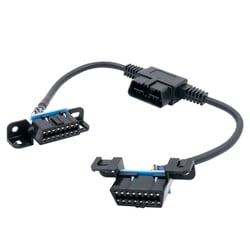
AutoMeter brings decades of instrumentation expertise to the gauge sensor module space. AutoMeter has revolutionized the way racers and vehicle builders think about instrumentation and vehicle electronics for more than 60 years, setting the standard for accuracy, precision, and durability with an ISO 9000:TS 16949 certified quality system. Their lineup includes solutions ranging from GPS speedometer interface modules to OBD-II CAN bridge modules — the AutoMeter CAN Bridge is an ideal solution for streamlining gauge additions on OBD-II engine platforms from 1996 onward, capturing existing sensor data and outputting up to six signals to drive a wide range of AutoMeter gauges and dashes.
Choosing the Right Gauge Sensor Module
- ECU Compatibility: Verify that the module is designed to work with your specific ECU brand and model — Holley EFI modules, for example, are purpose-built for Holley's own Dominator, HP, Terminator, and Sniper platforms.
- CAN Bus Support: Modern modules that communicate over a CAN bus network reduce wiring complexity and improve data accuracy across multiple gauges simultaneously.
- Number of Gauges: Some modules are designed to support a single gauge set while others, like daisy-chainable designs, can scale with your build.
- Installation Simplicity: Look for pre-pinned connectors and plug-and-play designs to minimize installation time and potential for errors.
- Application Type: Whether street, track, or marine, confirm the module is rated for your environment — especially regarding moisture and vibration resistance.