



Nitrous / Nitrous Purge / Fuel Solenoid


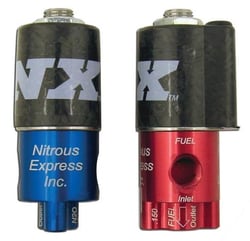

Nitrous Express MAINLINE FUEL Stainless Steel Fuel Solenoid .125 Orifice




What Are Nitrous, Nitrous Purge, and Fuel Solenoids?
At the heart of every nitrous oxide injection system is a deceptively simple component: the solenoid. Nitrous and fuel solenoids are electrically operated valves that control the precise flow of nitrous oxide and supplemental fuel into the engine's intake tract. When the system is activated — typically at wide-open throttle — these solenoids snap open in a fraction of a second, delivering a carefully metered charge that can result in dramatic power gains. Understanding the role of each solenoid type is essential for building a reliable, safe, and effective NOS system.
Nitrous Solenoids: The Gatekeepers of Power
A nitrous solenoid contains an electromagnet that opens a plunger and allows pressurized liquid nitrous oxide to flow into the engine's intake system. These solenoids are typically controlled by an arming switch or an electronic nitrous controller, and they can carry a current draw ranging widely depending on application and flow requirements. It is critically important to remember that nitrous solenoids are engineered to handle significantly higher pressures than fuel solenoids — the two are not interchangeable. Choosing a nitrous solenoid that is correctly sized to match your system's jetting is just as important as any other tuning decision.
Nitrous Purge Solenoids: Starting Clean Every Time
Before a run, many competitors activate a purge solenoid — and for good reason. When nitrous feed lines contain trapped air or gaseous nitrous oxide rather than liquid, the system delivers a less dense, inconsistent charge at activation. A purge solenoid is a separate electrically operated valve used to evacuate that trapped gas, bringing liquid nitrous oxide all the way to the main solenoid valves so the system fires at full strength the instant it is triggered. The distinctive plumes of vapor vented during a purge are a familiar sight at drag strips — and a sign that the driver's system is properly prepared for launch.
Fuel Solenoids: The Other Half of the Equation
In a wet nitrous system, separate solenoids control additional fuel injection to supplement the nitrous charge and maintain a safe air-to-fuel ratio. Fuel solenoids operate at lower pressures than their nitrous counterparts and are available in various orifice sizes to match the power level of the system. Matching the flow capacity of the fuel solenoid to the nitrous solenoid and jet sizing is critical — a lean condition in a nitrous engine can cause catastrophic detonation, while too rich a mixture will rob power and can cause backfires.
What to Consider When Shopping Solenoids
- Flow capacity: Solenoid orifice size must match your intended horsepower shot and jet sizing.
- Pressure rating: Nitrous solenoids must withstand higher line pressures than fuel solenoids.
- Current draw: High-amp solenoids require proper wiring, relays, and fusing to protect the electrical system.
- Dry vs. wet system: Dry systems add only nitrous oxide while the ECU compensates for fuel; wet systems use dedicated fuel solenoids for supplemental fuel delivery.
- Mounting location: Purge solenoids should be mounted as close to the main nitrous solenoid as possible for maximum effectiveness.
Top Brands in Nitrous, Purge & Fuel Solenoids
GPD is a well-established name in the automotive aftermarket, with roots stretching back to 1974 and a broad catalog spanning HVAC, engine management sensors, and air and fuel system components. Their presence in the nitrous solenoid space reflects their wide-ranging expertise in precision fluid and gas control components for the automotive market.