



Multi Purpose Grease
 Representative Photo, actual item may vary







 Representative Photo, actual item may vary

 Representative Photo, actual item may vary
 Representative Photo, actual item may vary

 Representative Photo, actual item may vary
 Representative Photo, actual item may vary

 Representative Photo, actual item may vary
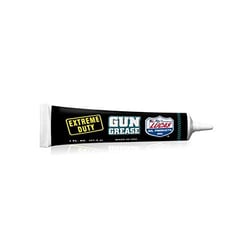
 Representative Photo, actual item may vary



 Representative Photo, actual item may vary

What Is Multi Purpose Grease?
Multi purpose grease is one of the most essential consumables in any garage, shop, or fleet maintenance program. At its core, it is a semi-solid lubricant engineered to reduce friction and prevent metal-to-metal contact across a wide variety of moving parts. Unlike liquid oils that flow away from the point of application, grease stays put — clinging to surfaces even under centrifugal force, gravity, or sustained pressure.
The most common formulation is lithium-based grease, which offers a strong combination of water resistance, mechanical stability, and broad temperature tolerance. Lithium-complex and calcium-sulfonate variants push performance further, handling more demanding thermal and load conditions while remaining compatible with most standard lithium greases. The NLGI Grade 2 rating — the most widely used in automotive and industrial settings — strikes the right balance between consistency and flow, making it the go-to specification for the majority of maintenance tasks.
Where Is Multi Purpose Grease Used?
The application range for multi purpose grease spans nearly every segment of vehicle and equipment maintenance. In automotive use, it is applied to wheel bearings, suspension joints, steering components, chassis grease fittings, door hinges, and CV joints. Beyond passenger cars and trucks, the same grease formulations serve agricultural equipment, construction machinery, marine vessels, powersports vehicles, and general industrial machinery — anywhere moving parts need reliable, long-lasting lubrication.
- Wheel bearings and hub assemblies – Grease forms a protective film between rolling elements, reducing heat and wear under high rotational loads.
- Chassis and suspension fittings – Regular re-greasing of ball joints, tie rod ends, and U-joints prevents premature wear and vibration.
- Steering components – Consistent lubrication keeps steering feel precise and reduces play over time.
- Pins, bushings, and pivot points – Any sliding or pivoting metal interface benefits from a grease barrier against corrosion and abrasion.
Key Considerations When Choosing a Grease
Not all greases are compatible with each other. Mixing incompatible formulations — such as a calcium-sulfonate grease with a standard lithium product — can cause the mixture to break down and lose its lubricating properties entirely. Always identify what grease is already in a component before adding or switching products. Beyond compatibility, consider the operating temperature range, load type (light-duty chassis work versus heavy-duty bearing applications), and environmental exposure (moisture, dust, or saltwater).
Top Brands in Multi Purpose Grease
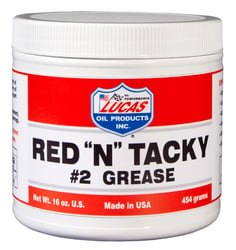
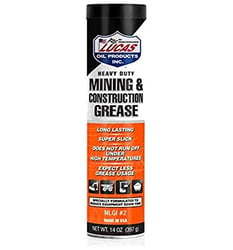
Lucas Oil is a leading brand in this category, and for good reason. Their grease lineup — including the well-known Red 'N' Tacky and X-tra Heavy Duty formulas — delivers exceptional water resistance, rust and oxidation inhibition, and NLGI GC-LB certification, making them suitable for automotive, agricultural, and heavy-duty industrial applications alike.
Liqui Moly, the renowned German lubricant specialist, brings precision engineering to their multi purpose grease offerings. Their lithium soap-based formulas are DIN 51502 certified and designed for long-term lubrication across a wide service temperature range, with standout resistance to both cold and hot water washout — a hallmark of the brand's European engineering standards.
Valvoline is a trusted name with decades of lubricant expertise. Their multi purpose grease products, including extreme-pressure formulations, are designed to meet and exceed NLGI GC-LB requirements and cover a broad range of vehicles including domestic, European, and Asian applications.
DRP Performance rounds out the category with purpose-built grease solutions aimed at performance and racing-oriented applications, where consistency under stress and precision lubrication are paramount.
Finally, Timken Bearings — a name synonymous with bearing technology — also offers multi purpose grease products informed by their deep expertise in rolling-element bearing design, making their formulations a natural fit for bearing-specific lubrication tasks.