



Boost Gauge


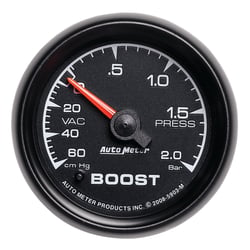
AutoMeter 5903-M Elite Series 2-1/16" Mechanical Boost/Vacuum Gauge 60cmHg-2.0 Bar


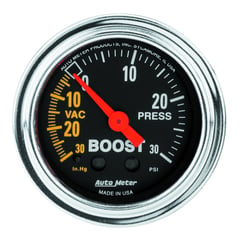
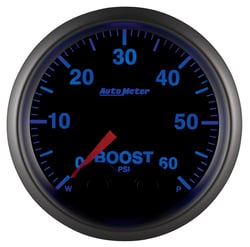
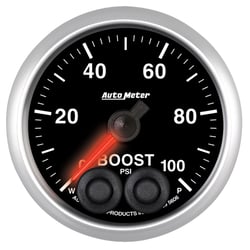


AutoMeter 5677 Elite 2-1/16" Boost/Vacuum Gauge 30inHg-30psi Digital Stepper Motor

AutoMeter 4959 Ultra-Lite II Vacuum/Boost Gauge 2-1/16" 30inHg-30PSI Digital Stepper Motor
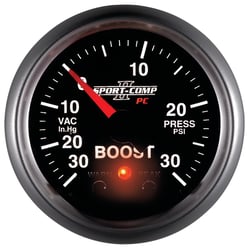
AutoMeter 3677 Vacuum/Boost Gauge 2-1/16" 30inHg-30psi Digital Stepper Motor Sport-Comp II

AutoMeter 4377 Ultra-Lite 2-1/16" Boost/Vacuum Gauge 30inHg-30psi Digital Stepper Motor
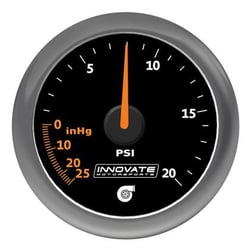


AutoMeter 5959 ES Series 2-1/16" Vacuum/Boost Gauge 30inHg-30PSI Digital Stepper Motor


AutoMeter P30232 Spek 2-1/16" Boost/Vacuum Gauge 30inHg-30psi Digital Stepper Motor
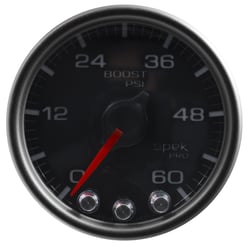

AutoMeter 3376 Sport-Comp Boost/Vacuum Gauge 2-1/16" 30inHg-15psi Digital Stepper Motor

AutoMeter 5777 Phantom 2-1/16" Boost/Vacuum Gauge 30inHg-30psi Digital Stepper Motor
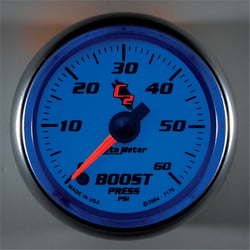
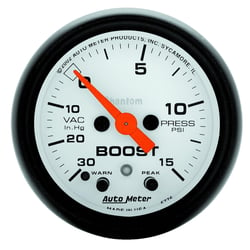
AutoMeter 5776 Phantom 2 1/16 Inch Vacuum Boost Gauge 30inHg 15psi Digital Stepper Motor Peak Warn


AutoMeter 3377 Sport-Comp Boost/Vacuum Gauge 2-1/16" 30 PSI Digital Stepper Motor
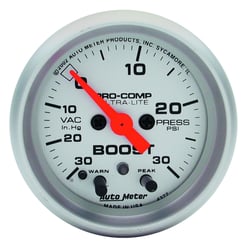
AutoMeter 4376 Ultra-Lite 2-1/16" Boost/Vacuum Gauge 30inHg-15psi Digital Stepper Motor
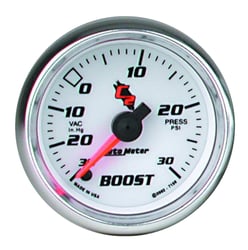

AutoMeter P30212 Spek 2-1/16" Boost/Vacuum Gauge 30inHg-30PSI Digital Stepper Motor


AutoMeter 3659-00406 Boost/Vacuum Gauge 2-1/16" -30inHg to 30psi Digital Stepper Motor


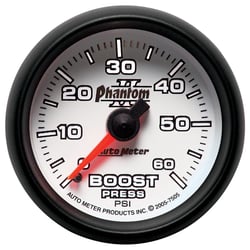


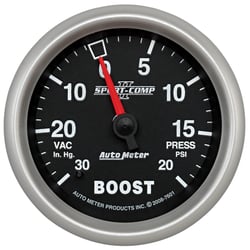


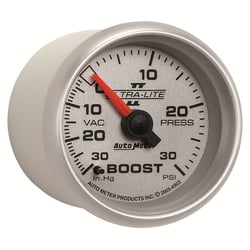

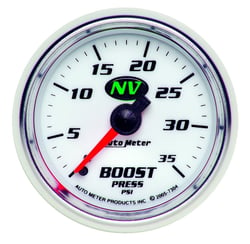

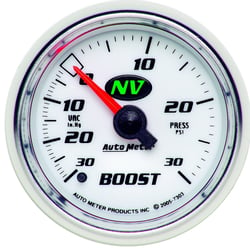
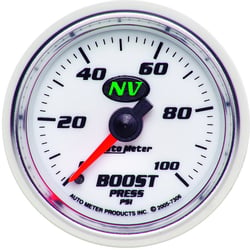
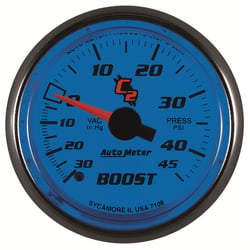

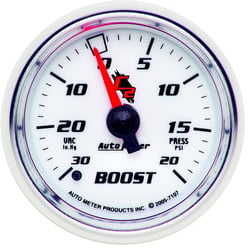
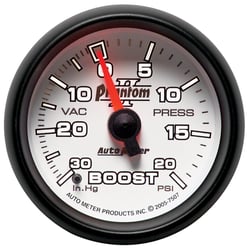


AutoMeter 880026 Vacuum/Boost Gauge 2-1/16" 30inHg-20PSI Mechanical White Mopar
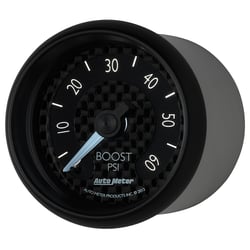

AutoMeter 5403 Pro-Comp 2-5/8" Liquid Filled Mechanical Blower Pressure Gauge 0-60 PSI
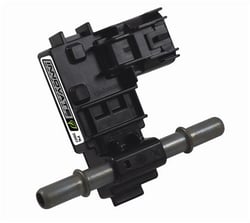
What Is a Boost Gauge and Why Does It Matter?
Any engine running forced induction — whether turbocharged or supercharged — lives and dies by boost pressure. A boost gauge monitors the manifold pressure your turbo or supercharger is producing, giving you a real-time window into one of the most critical parameters of a performance engine. Without one, overboost events can go undetected until they cause catastrophic damage to pistons, head gaskets, or the turbocharger itself.
Boost gauges measure both positive pressure (boost) and negative pressure (vacuum), typically expressed in PSI or inHg. This dual-function reading is useful not only at wide-open throttle, but also at idle and part-throttle, where vacuum levels can signal intake leaks or other engine health issues. Whether you're running a modestly tuned daily driver or a high-horsepower race build, a properly installed boost gauge is an essential piece of situational awareness on your instrument panel.
Mechanical vs. Electric vs. Digital: Which Type Is Right for You?
Boost gauges come in three main configurations, each with distinct advantages:
- Mechanical gauges connect directly to the intake manifold via a nylon or braided stainless line and require no electrical hookup. They offer instant, real-time needle response and are popular for their simplicity and reliability.
- Electric gauges use a remote pressure sender mounted near the manifold, with only a wiring harness running into the cabin. This eliminates the risk of boost pressure entering the passenger compartment and makes routing much cleaner on modern vehicles.
- Digital gauges take accuracy further with numerical displays, peak-hold memory, programmable warning thresholds, and data-logging outputs — ideal for tuners who want to track maximum boost across multiple pulls.
Top Boost Gauge Brands
AutoMeter is one of the most recognized names in performance instrumentation. AutoMeter offers boost gauges in digital, electric, and mechanical versions to suit virtually any setup, and each gauge is built with race-tested durability and compatibility across turbine and supercharged engines. Their mechanical boost/vacuum gauges have found their way into more builds than any other, using a patented high-precision bourdon tube meter movement for exceptional accuracy and durability. AutoMeter offers dozens of unique gauge lines — including the Z-Series, Ultra-Lite, Phantom, Factory Matched, and Cobalt — providing a wide variety of face colors, bezel styles, and illumination options.
Prosport has earned a loyal following among import and sport compact enthusiasts for their feature-rich gauges at accessible price points. Their Premium, Halo, and Premium EVO series are professional-grade offerings that include high-performance senders, plug-and-play wiring, peak recall, and a programmable warning feature built directly into the gauge. Users can program the boost gauge to blink and beep if boost exceeds a set threshold , making it a proactive tool for protecting forced-induction engines during aggressive driving or tuning sessions.
Specialty Chrome offers a classic, style-forward option for builders who want their boost gauge to complement a polished or custom interior aesthetic, making them a solid pick for show builds and resto-mods alike.
VDO Gauges brings decades of OEM-grade instrumentation expertise to the aftermarket. VDO boost gauges are known for their clean, factory-style appearance and dependable accuracy — a natural choice for drivers who prefer an understated, OEM-integrated look.
Equus Gauges provides an approachable entry point into boost monitoring, offering straightforward gauges that deliver reliable readings without complexity — well-suited for weekend warriors and first-time gauge installers.
What to Look for When Shopping Boost Gauges
When choosing a boost gauge, consider the pressure range you need — most street turbo applications fall within 0–35 PSI, but diesel and extreme-boost builds may require gauges rated to 60 PSI or higher. Size is another key factor: the standard 52mm (2-1/16") diameter fits most aftermarket gauge pods and A-pillar mounts. Finally, think about backlighting and display style to ensure your new gauge integrates seamlessly with your existing instrument panel and cockpit lighting.