



Fuel Injection Throttle Body Flow Booster
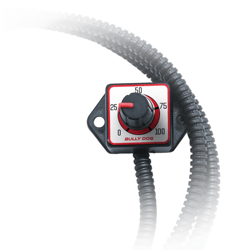


What Is a Fuel Injection Throttle Body Flow Booster?
Every time you press the accelerator, your throttle body is hard at work. Fuel injection throttle body flow boosters are performance-oriented components and upgrades designed to optimize the airflow moving through your throttle body and into the intake manifold—unlocking throttle response, engine efficiency, and overall drivability that factory configurations often leave on the table.
The throttle body is the valve that controls how much air flows into your engine, and it's the direct link between your accelerator pedal and engine response. Found in every fuel-injected vehicle, this component works constantly to balance air and fuel intake, affecting everything from acceleration smoothness to idle quality and fuel economy. A flow booster enhances this process by reducing restriction and improving the volume and velocity of air that the throttle body can deliver.
How Throttle Body Flow Boosters Work
A fuel injection throttle body is a cylindrical housing positioned between your air intake filter and your engine's intake manifold. Inside it sits a butterfly-shaped valve—essentially a rotating gate—that controls how much air flows into your engine. Under factory settings, this valve and the surrounding bore are calibrated for general-purpose driving and emissions compliance, which can mean compromises in peak airflow. Flow boosters address this by optimizing how air enters and moves through the throttle body assembly.
The throttle body receives commands from your engine control module based on pedal position, engine speed, and driving conditions, then adjusts the valve opening to regulate airflow precisely. This electronic throttle control allows your fuel injection system to deliver the exact amount of fuel needed for any driving situation, making your engine more responsive, efficient, and cleaner-burning. When paired with a quality flow booster, the entire intake event becomes more efficient—translating to crisper throttle tip-in, smoother power delivery, and in many applications, measurable gains in horsepower and torque.
Why Throttle Body Airflow Matters
Think of the throttle body as a gate on an airway: even a modest improvement in how freely air passes through that gate can have a cascading positive effect on combustion quality, fuel atomization, and engine response. For enthusiasts seeking to get more from their engine without major mechanical modifications, throttle body flow boosters represent one of the most accessible upgrades in the air and fuel delivery system.
Whether you're looking to sharpen everyday driving response or extract more performance from a modified build, understanding what's available in this category—and which brands stand behind their products—is essential.
Top Brands in Throttle Body Flow Boosters
Dinan is a name synonymous with precision BMW performance engineering. Known for developing rigorously tested components that integrate seamlessly with BMW's sophisticated engine management systems, Dinan brings its high-standard approach to throttle body flow enhancement for drivers who demand both performance and reliability from their European vehicles.
Bully Dog has built a strong reputation in the performance aftermarket for aggressive, results-driven products. Bully Dog's throttle body flow boosters are engineered for drivers who want tangible improvements in throttle response and air delivery, and the brand's broad vehicle coverage makes them a popular choice across a wide range of applications.
What to Consider When Shopping
- Vehicle compatibility: Always confirm the product is rated for your specific make, model, engine, and year.
- Integration with existing mods: If you've already upgraded your intake or exhaust, a flow booster can compound those gains—but verify system compatibility.
- OEM vs. performance specs: Some flow boosters are direct replacements engineered for improved flow; others are supplementary devices. Know which type suits your goals.
- ECU calibration: On some platforms, significant airflow changes may benefit from a corresponding tune to ensure the engine management system takes full advantage of improved airflow.