



Tube Bending Machine


Eastwood Company 72076 Air-Hydraulic Conversion Kit for High Capacity Tubing Bender


Eastwood Company 32803 BendPak BB-2 Blue Bullet Exhaust Pipe Bender with B-2 Die Package
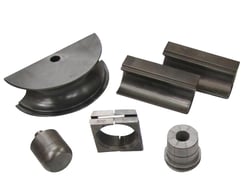


Eastwood 21124 1.0" x 4" Radius 240° Mandrel Die for High Capacity Tubing Bender

Eastwood Company 21122 2in x 6in Radius 120 Degree Bending Die for High Capacity Tubing Bender

What Is a Tube Bending Machine?
A tube bending machine is a shop tool engineered to shape metal tubing — round or square — into precise angles and curves without heating, cutting, or distorting the tube wall. Whether you're routing brake lines under a classic car, fabricating a custom roll cage, or running HVAC refrigerant lines, the right tube bender ensures clean, kink-free bends that maintain the structural integrity and flow characteristics of the tubing.
Tube bending machines range from compact handheld lever-type benders suited for small-diameter soft copper and aluminum, all the way up to floor-standing hydraulic and electric units capable of handling heavy-wall steel tubing up to 2" in diameter and beyond. Choosing the right tool depends on the tubing material, wall thickness, diameter, and the volume and complexity of bends you need to make.
Why Tube Bending Matters in the Shop
Improper bends are more than cosmetic problems. A kinked or flattened tube restricts fluid or gas flow, weakens the tube at the bend point, and can cause premature failure in critical systems. In automotive work, this can mean a cracked brake line, a leaking fuel line, or a compromised exhaust. In HVAC and refrigeration work, a crushed refrigerant line reduces system efficiency and can damage compressors. A quality tube bending machine controls the bend radius and angle precisely, eliminating these risks and producing repeatable, professional results every time.
Types of Tube Bending Machines
- Manual (Lever-Type) Benders: Operated by hand, these are ideal for small-diameter tubing in copper, aluminum, and thin-wall steel. They are compact, affordable, and excellent for field work or low-volume jobs.
- Manual Floor-Standing Benders: Larger lever-action benders mounted on a stand, capable of bending up to 2" round or square tubing. A go-to for automotive fabricators building roll cages, chassis, and exhaust systems.
- Hydraulic Benders: Powered by hydraulic force, these machines handle heavy-wall and large-diameter tubing with minimal operator effort, delivering consistent bends in industrial and commercial shop environments.
- Electric/Hydraulic Benders: Self-contained units with electric pumps for high-volume or production bending tasks, offering speed, precision, and reduced operator fatigue.
Top Tube Bending Machine Brands
Imperial has been a trusted name in tubing tools since 1905, building a reputation among HVAC technicians and tradespeople for precision and durability. Imperial tube benders feature calibrated bend markings for accurate left-hand, right-hand, and offset bends, along with their patented Roto-Lok™ indexing lever design for smooth, tight 180-degree bends with less operator effort. They are especially well-regarded for working with soft copper, aluminum, and thin-wall steel tubing.
Woodward Fab is a leading manufacturer of metalworking and fabrication equipment, offering a comprehensive lineup from manual floor-standing benders to fully hydraulic electric units. Their WFB2 manual bender features CNC-machined components and handles tubing up to 2" in diameter across steel, aluminum, and copper — making it a popular choice for roll cage fabrication, custom chassis work, exhaust systems, and motorcycle frames.
RIDGID brings decades of professional-grade tool manufacturing to the tube bending category. Known for their robust construction and dependability on jobsites, RIDGID tube benders are a staple in plumbing, mechanical, and HVAC trades, offering models designed for accurate, repeatable bends in copper and other common tubing materials.
What to Look for When Shopping Tube Bending Machines
- Tubing diameter and material compatibility — confirm the bender handles your specific OD and wall thickness
- Bend angle range — most lever benders reach 180 degrees; verify the range for your application
- Die sets and interchangeability — multi-size or swappable dies add versatility across jobs
- Manual vs. hydraulic — consider production volume and tubing hardness when choosing drive type
- Portability and stability — handheld benders travel easily; floor-standing models often include mounting holes for securing to a workbench or floor