



Clutch Release Bearing Guide
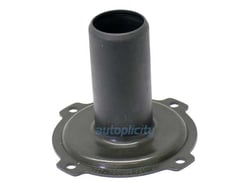

What Is a Clutch Release Bearing Guide?
In a manual transmission vehicle, the clutch release bearing — also known as the throw-out bearing — is responsible for one of the most frequently repeated mechanical actions in your drivetrain. The clutch release bearing guide (sometimes called a guide sleeve or guide tube) is the precision-machined component that the release bearing slides along every time you press or release the clutch pedal. Without a properly functioning guide, the bearing cannot travel smoothly and concentrically toward the pressure plate's diaphragm spring fingers, compromising the clean disengagement needed for smooth gear changes.
Think of the guide as the bearing's track. The throwout bearing is a thrust-type bearing that connects the stationary clutch fork or hydraulic actuator to the spinning pressure plate; when the clutch pedal is depressed, the bearing moves forward to contact the diaphragm spring fingers of the pressure plate, releasing the clutch disc from the flywheel and interrupting power flow from the engine to the transmission. The guide sleeve makes that linear travel precise and repeatable, thousands of times over the life of the clutch assembly.
Why the Guide Sleeve Matters
This process occurs every time a gear change is made, making the release bearing one of the most frequently used components in a manual transmission vehicle — and while the release bearing may be small, it plays an important role in maintaining the overall health and performance of the clutch system. The guide that directs its travel is equally critical. A worn, cracked, or misaligned guide sleeve can cause the bearing to bind or wobble during actuation, leading to uneven pressure plate contact, premature bearing wear, and the characteristic grinding or rattling noises that signal clutch trouble.
Due to harsh working conditions such as high-speed rotation and load impact, once the clutch release bearing fails, it will not only cause the gearbox to fail to operate normally, but may also cause serious damage to the entire drive system — with common fault types including bearing wear, jamming, and abnormal noise. Replacing the guide sleeve at the same time as a release bearing or full clutch kit is considered best practice, as the two components wear in tandem.
What to Look for When Shopping
- OEM Fit & Tolerances: The guide sleeve must match the precise inner diameter and mounting configuration of your specific transmission. Even small dimensional variances can cause misalignment.
- Material Quality: Choose components from reputable manufacturers that meet or exceed OEM specifications, since inferior parts with poor materials or loose tolerances fail prematurely and can damage surrounding components.
- Complete Clutch Service: A release bearing working properly will reduce stress on the pressure plate and clutch assembly, which reduces wear and extends the life of other expensive clutch components — so consider replacing the guide sleeve whenever tackling a full clutch job.
- Vehicle Application: Always verify fitment by year, make, model, and transmission code before ordering.
Top Brands for Clutch Release Bearing Guides
Corteco is a standout choice for precision clutch components. Corteco is the aftermarket brand of the Freudenberg Group and one of the leading OE manufacturers of components for many popular European makes. With a comprehensive range of over 26,000 products, Corteco delivers OEM quality that exceeds industry standards — making their clutch release bearing guides a trusted option for enthusiasts and professional technicians alike.
OE Aftermarket rounds out the selection with direct-fit replacement parts engineered to match original equipment specifications. OE Aftermarket components are designed for straightforward, no-modification installation, making them a reliable choice for restoring clutch system performance to factory standards.